Author: logancollins

Modeling global influences on networks by embedding them in manifolds


No Comments

Overview

Let V be a set of graph vertices embedded in some manifold M and E be a set of graph edges embedded in ℝ. Since manifolds are locally homeomorphic to Euclidean space, every open set a ∈ M can be mapped to an open set b ∈ ℝ by a homeomorphism f. Likewise, for every f there exists an inverse -1 which maps from ℝ to M.

Equation 1

The distance L between vertices u and v will be defined by the Euclidean metric in ℝ and the vertices will be defined in terms of Euclidean coordinates.

Example: a Graph on a 2-Manifold

Consider a 2-manifold M embedded in ℝ3 and defined by a multivariable function h(x,y) with open boundaries (-5,5), (-5,5), and (-1,1) for x, y, and z respectively.

Equation 2

Let V be a set of graph vertices be embedded in M. Every vertex v ∈ V is defined as a point v ∈ M and every edge vivj ∈ E is defined as a parameterized curve s ⊆ M for which the endpoints of s are the vertices vi ∈ V and vj ∈ V.

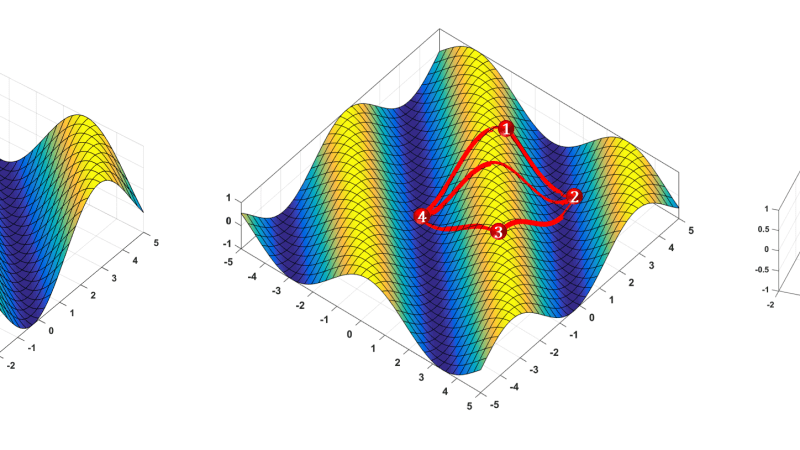
Figure 1

Figure 1 (A) Perspective view of the 2-manifold M and graph G. (B) Since M is embedded in ℝ3 and the vertices v ⊆ M, the Euclidean coordinates for each vertex are listed as ordered triples. The distance L between any two points or graph vertices u and v is given by the shortest curve s which can be parameterized on M from u to v. The distance L must satisfy the axioms of a metric on M. (C) Adjacency matrix for G. (D) M and G as a projection on ℝ2 (a “top view”). (E) Perspective view of the graph G embedded in ℝ3 without M.

In this example, five curves corresponding with the five edges of G will be parameterized. The following steps were used to generate these parameterizations in MATLAB.

  1. Considering only ℝ2 (a “top view”), the equations of line segments between vi and vj were found by determining the slopes and y-intercepts from the x and y coordinates of vi and vj. This equation took the form y = mx + b.
  2. The commands x=[-5:0.1:5] and y=[-5:0.1:5] were inputted to generate vectors of data for x and y.
  3. The equation of the surface, h(x + y) = sin(x + y) was created.
  4. MATLAB’s “fit” tool was used to fit parameterized curves to the surface. The command took the form fit(mx + b, h(x, mx + b), ‘sin1’).
  5. The symbolic vector equations were generated by setting each x equal to m-1t, each y equal to t plus the y-intercept, and each z equal to sin(k1t + k2) where the constants were provided by the “fit” tool from the previous step.
  6. The resulting functions were visualized along with the surface h. Since they were still phase shifted relative to the surface, these shifts were manually corrected. It should be noted that this step would not be effective with manifolds that cannot be easily visualized, so for more abstract applications, improvements to this procedure will be necessary.
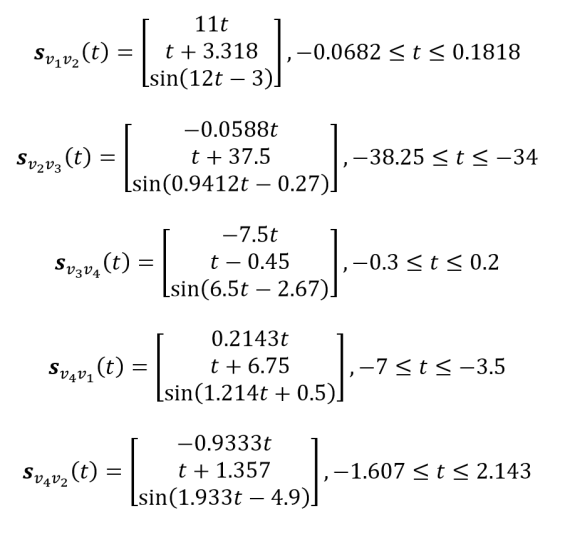
  7. The domain of t was computed. The final vector equations are recorded below.

Equation 3

From these parametric equations, arc lengths can be computed by using the arc length formula in ℝ3. Here, the parameterization and arc length formula are utilized for illustrative purposes, but it should be noted that other methods for determining arc length might be superior in many cases.

Equation 4

For instance, rather than fitting parametric curves onto a 2-manifold, the graph edges might be described in terms of numerous short tangent line segments. Together, these segments would approximate the appropriate parametric curves. By summing the lengths of the small segments, arc lengths for graph edges could be numerically approximated. Furthermore, this type of numerical technique could be extended to manifolds embedded in non-Euclidean spaces (i.e. complex manifolds, manifolds embedded in elliptic spaces, etc.) by defining an appropriate metric for the given space.

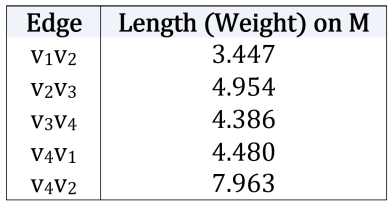
Table 1

Table 1 Arc lengths for the edges of G embedded in M. These values were computed from the parametric curves describing the edges.

Now that G has been characterized in M, the network can be locally mapped into ℝ2. There exist many possible sets of homeomorphisms which could map open sets of points in M (which together contain G) to ℝ2. In the broader context, depending on the modeling application, different sets of maps might be chosen. Here, the mappings will project to ℝ2 along the z-axis. The open sets p1, p2, p3, and p4 centered on each vertex v ∈ V will have arbitrarily defined radii r1,2,3,4 = 5 on the manifold M and project to open sets q1, q2, q3, and q4 in ℝ2. In this case, the radii of these open sets do not affect the mappings so long as the open sets cover the graph G and the following conditions hold.

Equation 6

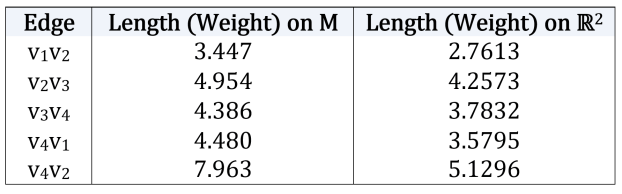
As such, the Euclidean distance metric on ℝ2 (above) can be applied to globally change the edge lengths from the lengths given in table 1 and the middle column of table 2 to those given in the rightmost column of table 2.

Table 2

Table 2 Lengths for the edges of G projected into ℝ2 compared with the values from table 1. The lengths in ℝ2 were computed using the Euclidean distance metric.

Applications

While the example provided in this text represents a somewhat arbitrary situation, it illustrates a general process which might be extended for many applications. Many phenomena in nature reflect particular geometric properties which could be amenable to modeling with manifolds. When the given geometries influence the properties of real-world networks, my technique may provide a useful model.

For instance, consider the topographic maps found in parts of sensory (i.e. retinotopic, somatotopic, tonotopic, etc.) and motor cortices. Neurons in these regions are spatially arrayed in a manner which corresponds to the physical characteristics of sensory data. In the case of retinotopy, the spatial coordinates of an observed image have a direct correspondence to the spatial coordinates on the retina. The coordinates on the retina in turn have a direct correspondence to coordinates in the primary visual cortex (V1). Higher cortical areas have more complicated retinotopic maps in which adjacent subsets of the visual field are not always adjacent to each other in the given cortical region. The curved surface of the retina could be described as a 2-manifold which takes in deformed versions of the final images that the brain reconstructs. In addition, the cortical folds in V1 could be described by another 2-manifold. Since the final percept (what a person consciously “sees”) is reconstructed into an image that can be considered as roughly Euclidean, the local Euclidean properties of manifolds can be applied to this situation.

By fitting a parameterized surface to imaging data which show the folded geometry in V1 (or other topographic sensory or motor areas) and applying a graphical model with mesoscale (or higher) resolution of connectivity among regions within this cortex, global morphological changes which influence the final percept could be modeled. This may be useful for gleaning insights about congenital brain abnormalities and traumatic brain injuries. In addition, this method could be valuable for developmental neurobiology. Surfaces could be fitted to cortical geometries at multiple time-points in development and relationships between network structure, manifold geometry, and fetal brain activity in higher cortical regions (or their developing equivalents) could be analyzed. (Thomason et al. recently demonstrated a technique for fMRI in utero). Of course, it would be difficult to determine the types of percepts that a fetus might generate, so a different mathematical space may need to be constructed based upon functional activity in the developing downstream visual processing regions.

Here, only 2-manifolds are discussed. However, many other classes of manifolds could be amenable to modeling in this way. The range of applications could be greatly expanded by changing the requirement for a manifold to be locally Euclidean to a more general condition. Such manifolds would need to be locally homeomorphic to some chosen coordinate space, the particular space depending on the application (i.e. the complex plane, elliptic spaces, polynomial spaces, etc.) In this scenario, 2-manifolds and 3-manifolds which are locally homeomorphic to coordinate systems defined by other deformed surfaces and volumes would probably be particularly applicable. By constructing manifolds which are locally homeomorphic to other manifolds and computing how embedded networks are transformed across these manifolds, a myriad of potential phenomena could be analyzed. This method may open new possibilities for modeling of biological, technological, social, physical, and other real-world networks which are influenced by geometric factors.


This text represents one of my first forays into developing new mathematical tools. Given that I come from a biological background, it may appear quite rough to more mathematically-experienced individuals. However, I feel that this technique has potential to develop further and be applied to problems in science and engineering. I would welcome any constructive critiques so long as they are presented in a respectful manner.

Nine Answers from Logan Thrasher Collins


No Comments

Bion Alexander Howard interviewed me about futurism and rational romanticism. This material was originally posted on: medium.com

The only way of discovering the limits of the possible is to venture a little way past them into the impossible. 
— Arthur C. Clarke

Is emotion useful for scientists?

Let’s ask Logan!

Logan Thrasher Collins is a futurist and synthetic biologist at the University of Colorado, Boulder. His recent blog post, Rational Romanticism argues for a link between emotion and science. This helps us understand the world and the self.

Here, we interview him about futurism and Rational Romanticism:

1. Why futurism?

We live in an age of tremendous opportunity and challenge. The technosphere is growing in complexity at an unprecedented rate. We face a choice. We can embrace scientific exploration and have the stars or we can succumb to fear and meet extinction. Futurism allows us to approach tomorrow with optimism and intelligence. The futurist is free from status quo bias because the futurist possesses enough imagination to simultaneously envision radical positive change, collateral obstacles, and solutions to said collateral obstacles. I “live in the future” to shape the future and help make it beautiful.

2. How can we build a bright future for everyone?

To build a bright future for all, I propose that we integrate empathy and technology. Currently, humans possess disturbingly low degrees of empathy. This manifests as bullying, prejudice, discrimination, blame, and greed winning out over altruism. People tend to justify sociopathic behavior by inventing circuitous ways to diffuse their own responsibility. On the individual level, these issues can be taxing. On the societal level, they might be responsible for a large part of the inequality and violence in the world. Imagine a world in which most people can imagine the stories which lead to homelessness, unemployment, and poverty. For instance, rather than consider an individual on welfare to be “lazy” and undeserving of help, more people would visualize themselves in the same situation, and imagine possible sequences of events which may have led to the welfare recipient’s circumstance. Higher empathy would promote more and better altruism and help people understand underlying systemic problems. Such problems would likely be more efficiently and effectively solved by people who experience these empathetic sentiments.

To enhance empathy, we will need to properly apply technology. Early on, incorporating virtual reality into our online experiences may provide an environment with more sensory stimuli that activate empathetic cognitive processes. It is often difficult for people living in developed nations to visit far-away impoverished areas. As such, many feel a sense of removal from the struggles in those regions even when reading about them or observing photographs. With VR, people can witness such struggles firsthand, leading to stronger activation of empathetic neural pathways. People might virtually visit such locations for other reasons (i.e. adventure, exploration, recreation) and then be exposed to the challenges in those regions. Essentially, VR could make the world “smaller” and promote stronger ties across the global community of humans.

But virtual reality is only the beginning. I would advocate for voluntary cognitive enhancement of empathy using pharmacological, genetic (including designer babies), and implant-based methods. It is important to make these enhancements voluntary in order to prevent fascist politics from interfering with the process and causing net harm. However, voluntariness does not preclude social pressure. I propose we should attempt to foster an environment in which empathy enhancement is considered to be “responsible.” In this way, society may bifurcate from fearing empathy enhancement to actively encouraging it. The details of engineering these social pressures are complicated, but intelligent people can help determine how to do so without resorting to fascism. We may eventually achieve a superempathetic majority using such technologies.

Post-singularity, mass-scale mind uploading might be feasible. This could even extend to wild animals. I would argue, given this capability, we are morally obligated to upload every organism with the cognitive complexity of Drosophila melanogaster on up. After uploading all macroscale biological life, we should develop an empathy-based framework for how to end suffering in both humans and animals. For humans, uploading should be voluntary, at least until superintelligence has advanced enough to thoroughly understand objective morality and make decisions without underlying selfish motives. If the biosphere is placed in a computational substrate and we understand the emotional states of uploaded organisms, we may design a collective system to erase suffering, maintain exploratory impulses, and enhance joyful qualia.

3. What are some of your favorite future technologies?

When it comes to future technologies, there is a lot to be excited about. Personally, I’m most looking forward to the innovations that hybridize biological and non-biological systems. I’m particularly excited about soft bionanoelectronics, in vitro meat, bacterial nanorobots for environmental and biomedical applications, neural prosthetics and neuromorphic circuitry, telepathic communication via neural prosthetics (which has already been tested in rats by Berger’s group), nanoscale devices for connectomics, new sensory organs (i.e. Neil Harbisson’s eyeborg), improved computational protein engineering, and scalable brain-computer interfaces. Such technologies will bring us closer to a world where imagination and reality are inseparable. In the longer term, I look forward to mind uploading and radical qualia engineering. By merging our minds with technology, we will be able to engineer the brain’s hypercanvas in new and beautiful ways.

4. Who are some of your biggest influences?

Ray Kurzweil introduced me to the idea that technology supports its own development and so undergoes exponential growth. After reading about Kurzweil’s law of accelerating returns, I saw new possibilities for the future which I had previously thought would take thousands of years to reach. While I think Kurzweil’s prediction for the technological singularity occuring in 2045 is moderately overoptimistic, I would still argue that his model is plausible enough that the singularity may occur prior to 2100. Further, I appreciate Kurzweil’s optimism because it has driven so many people to strive to improve the world. Kurzweil has given us hope for the future and with hope comes people who are willing to make the attempt to build a bright tomorrow.

David Pearce, author of The Hedonistic Imperative, helped me flesh out my philosophical approach to transhumanism. Pearce seeks a future in which suffering is abolished. This includes human and animal suffering. In addition, Pearce hopes to use biotechnology to enhance happiness and raise the hedonic baseline so that our most blissful experiences today are far below our average state in the future. He emphasizes that we should engineer ourselves to retain fluctuations about this high emotional baseline. In this way, we would remain productive and continue acting as a curious, creative, and driven species. While the idea of superhappiness is off-putting to many, Pearce develops numerous convincing counterarguments to the most common critiques. These counterarguments are too extensive to detail here, but I encourage you to investigate them at (4).

It should be noted that Pearce and I disagree about the methods for achieving this vision. Pearce believes the entire Earth can be converted into a paradise using solely biological methods. I would argue that this would render the system too susceptible to collapse, resulting in more suffering. In order to ensure suffering vanishes forever, I would instead advocate mass mind uploading and transmutation of the planet Earth into computronium, allowing for any bifurcations into instability to be immediately reversed. I would also say that more transcendent emotional states will likely be achievable with more processing resources available to our minds. For this reason, the path to abolishing suffering involves a combination of neuroengineering, connectomics, nanotechnology, bioengineering, synthetic biology, neuromorphic computing, automation, AI, computational neuroscience, and mathematical qualia science rather than only genetic engineering, pharmacology, and similar techniques.

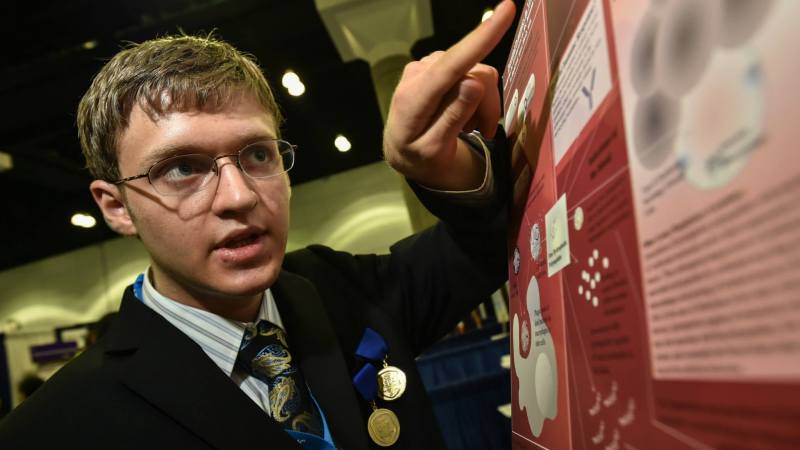
Some other people who have influenced my thinking on STEM and the future include Jack Andraka, Easton LaChappelle, Brian David Johnson, George Church, and a number of science fiction authors. Jack Thomas Andraka and Easton LaChappelle were scientists who, like me, began their research in high school. Jack Andraka developed an inexpensive diagnostic for pancreatic cancer while Easton LaChappelle developed an inexpensive, 3D printed prosthetic limb and a brain-computer interface to control the arm and hand. These individuals and thousands of other high school researchers (I met many of these people at the International Science and Engineering Fair) helped me realize that age is no barrier to changing the world. Brian David Johnson was the first futurist who I met in person and advocates using science fiction to help design the future. George Church has inspired me with his highly impactful work on synthetic biology innovations at the interface between academia and industry. Finally, many science fiction stories have influenced my approach to futurism. Some of the most influential of these include The Last Question (Asimov), Blood Music (Bear), Understand (Chiang), Utriusque Cosmi (Wilson), and True Names (Doctorow and Rosenbaum).

5. What research are you interested in?

I am particularly excited to use synthetic biology and bionanotechnology to build scalable brain-computer interfaces (BCIs) and to map synaptic connections in vivo. I have written some research proposals for such technologies and I am seeking labs which might have the resources necessary to help me implement these proposals. I cannot yet disclose the full details of my proposals on a public forum due to the problematic IP laws in the U.S., but I will say that they involve polymerosomes, gold nanoparticles, electrochemistry, conjugated antibodies, and X-ray microscopy. I enjoy researching interdisciplinary, outside-the-box solutions to seemingly intractable problems.

I’m in a transition period between antimicrobial synthetic biology and neuroengineering. Over the past five years, I have developed a de novo antimicrobial peptide, OpaL (Overexpressed protein aggregator Lipophilic), which disrupts bacterial homeostasis by forming insoluble aggregates when expressed intracellularly. In addition, I have engineered a bacterial conjugation delivery system for the gene encoding OpaL so that donor bacteria can be used to transfer opaL into recipients. I will submit my manuscript on this research for publication in a few weeks. After wrapping up this project, I intend to dive into my new ideas for neuroengineering.

6. What is Rational Romanticism (R2)?

Rational romanticism is a philosophy which unifies logic and emotion. I propose that, in order to be truly rational, one must also understand both the intrinsic and practical value of emotion. On the other end, in order to optimize emotional states and pursue existential meaning, one must utilize empiricism and logic. Culturally, rationality and romanticism have long been considered mutually exclusive. According to rational romanticism, they represent an inseparable whole. Rational romanticism suggests that effective reasoning requires emotions and logic to be merged.

7. Where could R2 be applied?

A troubling schism exists between the arts and the sciences. Many scientifically-oriented people mistrust the arts and claim that they are out-of-touch with the mechanistic workings of reality. Likewise, many artistically-oriented people mistrust science and claim that it is out-of-touch with the “soul” of the human experience. Both groups have a point, but they are mistaken in believing that art and science cannot merge.
 Pure rationalists engage in irrational and destructive behavior when they attempt to frame emotion as a distraction. Emotion is the goal, emotion is the meaning of life. All experiences of fulfillment, spirituality, joy, love, peace, and adventure are emotion. The pervasiveness of pure rationalism in technical communities has caused a disturbing level of risk-aversion. As I discuss on my blog, ambitious research projects are less likely to succeed than more moderate ones and it is difficult (from a pure rationalist perspective) to gain a reasonable measure for the degree of risk involved in such projects. The pure rationalist would discard such ambitious projects as having too much unknown risk. But throughout history, we have observed that the people who ignore boundaries and even apparent impossibilities, the people who keep obsessively fighting to make their vision a reality no matter the odds, we have seen that these are the people who change the world (i.e. the space program, the human genome project, heavier-than-air flight, the lightbulb, the automobile, the home computer). Rational romanticism embraces these risks and allows for outside-the-box, seemingly “crazy” innovators to make a difference.
Pure romantics engage in irrational and destructive behavior when they attempt to frame science and technology as a coldly logical automaton with no regard for humanity. This manifests in film and popular fiction, where science and technology usually appears as a tool of villains. Frankenstein, Gattaca, Brave New World, Jurassic Park, The Terminator, and countless other fearmongering works exemplify this trend. Popular non-fiction only reinforces this harmful mindset (i.e. most mainstream news articles that discuss philosophical considerations around science, Geek Heresy, anti-GMO books, religious critiques of technology, etc.) By promoting the idea that empiricism is evil and inhuman, society has been turned against technological solutions to problems, causing countless deaths (consider social reactions to Golden Rice), other tragedies, and missed opportunities for exploration and discovery. By replacing these pervasive anti-science attitudes with rational romanticism, technology will fully realize its tremendous potential and improve our lives.

8. How can we test R2 theory?

Initially, I propose that we test rational romanticism by investing in the collection and analysis of sociological, psychological, neurobiological, and political data over multiple timescales. We may identify new strategies for further improving rational romanticism via data-driven insights. When interpreting these data, we should emphasize global optimization of emotional states as the universe-wide system’s main goal. As time goes on, I propose that we develop quantitative theories of consciousness to directly measure and model emotional states. This will allow more precise and powerful pursuit of emotional optimization.

9. Why build emotional machines?

AGI does pose some existential risk, but this risk will be minimized if we construct humanlike AGI with emotions rather than an intelligence that resembles Bostrom’s hypothetical paperclip optimizer. Currently, AI research focuses around designing algorithms which learn how to perform specific tasks extremely well. I would argue that the best route to AGI might involve using many different algorithms, wired together into a cognitive structure that resembles the human brain. For instance, the dopaminergic mesolimbic reward pathway might be emulated by reinforcement learning and the CA3 region of the hippocampus could be mimicked by Hopfield memory nets. But the key would be to combine these algorithms in a way that emulates the entire anatomical structure of the human brain. Some other potentially important considerations might include inter-region connectivity to more closely approximate the brainlike operations and the use of neuromorphic circuitry to spatially localize information processing in a brainlike fashion and so experience more humanlike qualia. (Neuromorphic circuitry may also improve energy efficiency in such systems and make them easier to construct in a brainlike way). As such, AGI would be quite similar to humans.

Once we construct human-level AGI, we can enhance it towards greater-than-human abilities. In this way, even superintelligence will be rooted in humanlike construction. Furthermore, we could build superempathetic AGI which would be driven to help people in a rationally romantic manner. For instance, superempathetic AGI would not euthanize patients without discussion and explicit consent from everyone involved because it would understand the wider ramifications of such an act on the emotions of the patient’s family. Simpler qualia-optimization algorithms might not be so compassionate. On the larger scale, this would decrease the likelihood of existential risk from AGI. In this way, our machines could be made to understand human emotions and nuances, allowing for safer AGI.

Links:

  1. Logan’s blog post on Rational Romanticism
  2. Technical Transhumanism Facebook Group
  3. The Hedonistic Imperative, responses to objections
  4. On the relationship between emotion and cognition
  5. Church Of Maths on Facebook


Method for m-Dimensional Integration


No Comments

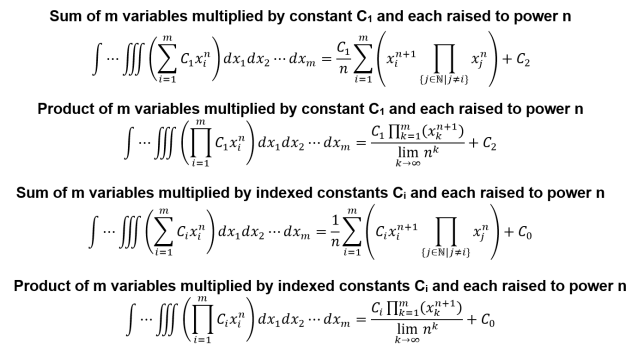
By generalizing the methods for double and triple integration, I have prepared a set of rules for integration over m variables. This technique may find applications in analyzing high-dimensional networks of spiking neurons, in quantum mechanics, and elsewhere.

  • Linearity holds for m-dimensional integrals, allowing the rules for integrating various functions to be combined.
  • The rules for m-dimensional integrals will hold for infinite-dimensional integrals.
  • Below, rules for computing m-dimensional polynomial functions, product functions, and sums of exponential functions are given. 

m-dimensional integration rules

  • Some special cases of the above rules are given next to simplify calculations under these particular conditions.

m-dimensional integration special cases


Global Highlights: Neuroengineering towards Whole-Brain Emulation and Mind Uploading


1 Comment

Logan Thrasher Collins

Key events in neurotechnology from 2006 to 2018.

Blue Brain Project Cortical Column Simulation1 (2006)

  • Mapped about 10,000 neurons in 2-week-old rat somatosensory neocortical columns with enough resolution to show the rough spatial locations of the dendrites and synapses.
  • After constructing a virtual model, algorithmic adjustments refined the spatial connections between neurons to increase accuracy (10,000 neurons and over 10 million synapses).
  • Emulated the cortical column using the Blue Gene/L supercomputer.
  • The emulation demonstrated high accuracy with respect to experimental data.

Cortical Column

Hippocampal Prosthesis in Rats2 (2012)

  • Theodore Berger and his team developed an artificial replacement for neurons that transmit information from the CA3 region to the CA1 region of the hippocampus.
  • This cognitive prosthesis employs a multi-input multi-output (MIMO) model to encode the information in CA3 and send it to CA1.
  • The prosthesis was shown to restore and enhance memory in rats (as evaluated by behavioral testing and brain imaging).

In Vivo Superresolution Microscopy for Brain Imaging3 (2012)

  • Stefan Hell (2014 Nobel laureate in chemistry) developed stimulated emission depletion microscopy (STED), a type of superresolution fluorescence microscopy which allowed imaging of synapses and dendritic spines.
  • STED microscopy uses transgenic neurons which express fluorescent proteins and fluoresce sequentially. Although the wavelength of the light used for imaging would ordinarily limit the resolution (the diffraction limit), STED’s temporal contrast overcomes this limitation.
  • Transgenic mice with glass-sealed holes in their skulls over their somatosensory cortices were imaged using STED (they were anesthetized during this process). Synapses and dendritic spines were observed up to fifteen nanometers below the surface of the somatosensory cortex.
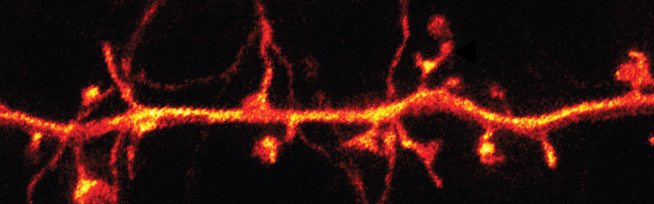
Superresolution microscopy in vivo

Eyewire: Crowdsourcing Method for Retina Mapping4 (2012)

  • The Eyewire project was initiated by Seung’s group. It is a crowdsourcing initiative for mapping the connectome in the retina and uncovering its neural circuits.
  • Laboratories first collect structural data from tissue in the retina using serial electron microscopy as well as functional data using two-photon microscopy.
  • In the Eyewire game, slices of imaging data are provided to players. The players then help reconstruct neural morphologies and circuits by “coloring in” the parts of the images that correspond to cells and then stacking many images on top of each other to generate 3D images. Artificial intelligence helps to provide initial “best guesses” and guide the players, but the players ultimately perform the task of reconstruction.
  • By November 2013, around 82,000 participants had played the game and its popularity continues to grow. Over time, Eyewire has shown great successes in reconstructing neurons and circuits.

Eyewire

The BRAIN Initiative5 (2013)

  • The BRAIN Initiative (Brain Research through Advancing Innovative Technologies) provided neuroscience with $110 million in governmental funding and $122 million in funding from private sources such as the Howard Hughes Medical Institute and the Allen Institute for Brain Science.
  • The BRAIN Initiative focused on funding research which develops and utilizes new technologies for functional connectomics. It helped to accelerate research on tools for decoding the mechanisms of neural circuits in order to understand and treat mental illness, neurodegenerative diseases, and traumatic brain injury.
  • The BRAIN Initiative emphasized collaboration between neuroscientists and physicists. It also pushed forward nanotechnology-based methods to image neural tissue, record from neurons, and otherwise collect neurobiological data.

The CLARITY Method for Making Brains Translucent6 (2013)

  • Deisseroth and his colleagues developed a method called CLARITY to make samples of neural tissue optically translucent without damaging the fine cellular structures in the tissue. This method was even able to make entire mouse brains transparent.
  • Mouse brains were infused with hydrogel monomers (acrylamide and bisacrylamide) as well as formaldehyde and some other compounds for facilitating crosslinking. Next, the hydrogel monomers were crosslinked by incubating the brains at 37°
  • Lipids in the hydrogel-stabilized mouse brains were extracted using hydrophobic organic solvents and electrophoresis.
  • CLARITY allows antibody labeling, fluorescence microscopy, and other optically-dependent techniques to be used for imaging entire brains. In addition, it renders the tissue permeable to macromolecules, which broadens the types of experimental techniques that these samples can undergo (i.e. macromolecule-based stains, etc.)
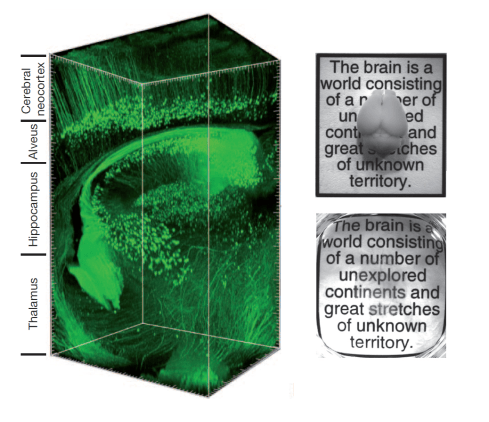
CLARITY Imaging Technique

Telepathic Rats Engineered Using Hippocampal Prosthesis7 (2013)

  • Berger’s hippocampal prosthesis was implanted in pairs of rats.
  • When “donor” rats were trained to perform a task, the donor rats developed neural representations (memories) that were encoded in their hippocampal prostheses.
  • The donor rat memories were processed by the MIMO model and transmitted to the hippocampal prostheses of untrained “recipient” rats. After receiving the memories, the recipient rats performed significantly better on the task that they had not been trained to perform.
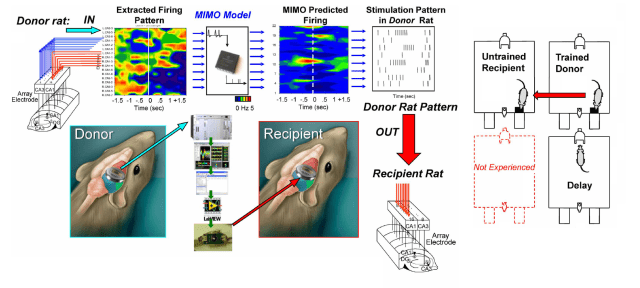
Rat Telepathy

Integrated Information Theory 3.08 (2014)

  • Integrated information theory (IIT) was originally proposed by Giulio Tononi in 2004. IIT is a quantitative theory of consciousness which may help explain the hard problem of consciousness.
  • IIT begins by assuming phenomenological axioms. These include that each experience is specifically characterized by how it differs from other experiences, each experience unified (cannot be reduced to interdependent parts), and the boundaries which distinguish individual experiences are describable as having specific “spatiotemporal grains.”
  • From these phenomenological axioms and the assumption of causality, IIT identifies maximally irreducible conceptual structures (MICS) associated with each experience. MICS represent particular patterns of qualia which form unified percepts.
  • IIT also outlines a mathematical measure of an experience’s quantity. This measure is called integrated information or φ.

Japan’s Brain/MINDS Project9 (2014)

  • The Brain/MINDS (Brain Mapping by Integrated Neurotechnologies for Disease Studies) project was initiated in Japan to further understanding of the brain. This project received almost $30 million in funding for its first year alone.
  • Brain/MINDS focuses on studying the brain of the common marmoset (a non-human primate that is abundant in Japan), developing new technologies for brain mapping, and understanding the human brain with the goal of finding new treatments for brain diseases.

Openworm10 (2014)

  • The anatomical elegans connectome was originally mapped in 1976 by Albertson and Thomson.
  • More data has since been collected on neurotransmitters, electrophysiology, cell morphology, and other characteristics of the elegans connectome.
  • Szigeti, Larson, and their colleagues made an online platform for crowdsourcing research on elegans computational neuroscience, with the goal of completing an entire “simulated worm.”
  • They also released software called Geppetto. This program allows users to manipulate both multicompartmental Hodgkin-Huxley models and highly efficient soft-body physics simulations (for modeling the worm’s electrophysiology and anatomy).

C. elegans Connectome

SyNAPSE Program of DARPA and IBM11 (2015)

  • The TrueNorth neuromorphic computing chip was constructed and validated by DARPA and IBM.
  • TrueNorth uses circuit modules which mimic neurons. Inputs to these fundamental circuit modules must overcome a threshold in order to trigger “firing.”
  • TrueNorth’s neuromorphic architecture enables emulation of up to 1 million neurons with over 250 million synapses.
  • The chip requires far less power than traditional computing devices.
  • TrueNorth can be programmed to emulate any arrangement of biological neurons.

Human Brain Project Cortical Mesocircuit Reconstruction and Simulation12 (2015)

  • The HBP achieved digital reconstruction of a 0.29 mm3 section of rat cortical tissue (31,000 neurons and 37 million synapses) based on a partial map, morphological data, “connectivity rules,” and additional known datasets.
  • This mesocircuit was emulated using the Blue Gene/Q supercomputer and a few accessory hardware components.
  • The emulation demonstrated enough accuracy to reproduce emergent neurological processes and yield new insights on how these processes function.
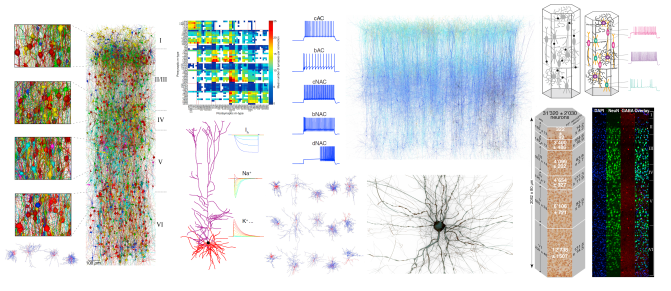
Cortical Mesocircuit

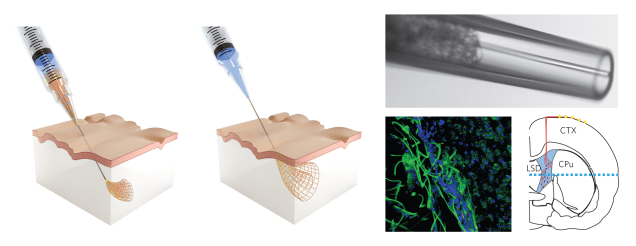
Neural Lace13 (2015)

  • Charles Lieber’s and his group developed a syringe-injectable electronic mesh with sub-micrometer-thick wiring that can be used for neural interfacing.
  • They constructed the meshes from flexible, biocompatible electronics. When injected, the neural lace expands to cover and record from centimeter-scale regions of tissue.
  • Neural lace may allow for “invasive” brain-computer interfaces to be less invasive by removing the need for surgical implantation.
  • Lieber has continued to develop this technology towards clinical application.
Neural Lace

Neural Dust14 (2016)

  • Maharbiz developed implantable, ~1 mm biosensors for wireless neural recording and tested them in rats (this “neural dust” could be miniaturized to less than 0.5 mm using customized electronic components).
  • Neural dust motes consisted of two recording electrodes, a transistor, and a piezoelectric crystal.
  • The neural dust received external power from ultrasound. Neural signals were recorded by measuring disruptions to the reflection of the ultrasound waves by the piezoelectric crystal. Signal processing techniques enabled precise measurement of activity.

Neural Dust

Hippocampal Prosthesis in Monkeys15 (2016)

  • Berger continued developing his cognitive prosthesis. Testing in Rhesus Macaques was performed.
  • As with the rats, monkeys with the implant showed substantially improved performance on memory tasks. Other tests supported these results.

The China Brain Project16 (2016)

  • The China Brain Project was launched to improve understanding of cognition’s neural mechanisms, develop brain research technology platforms, develop preventative and diagnostic interventions for brain disorders, and improve brain-inspired artificial intelligence technologies.
  • This project will be carried out from 2016 to 2030 with the goal of completing mesoscopic brain circuit maps.
  • China’s population of non-human primates and preexisting non-human primate research facilities give the China Brain Project an advantage. The project will focus on studying rhesus macaques.

Somatosensory Cortex Stimulation for Spinal Cord Injuries17 (2016)

  • Gaunt, Flesher, and colleagues found that microstimulation of the primary somatosensory cortex (S1) could partially restore tactile sensations to a patient with a spinal cord injury.
  • Electrode arrays were implanted into the S1 regions of a patient with a spinal cord injury. The array performed intracortical microstimulation over a period of six months.
  • The patient reported the locations and perceptual qualities of the sensations elicited by microstimulation. The patient did not experience pain or “pins and needles” from any of the stimulus trains. Overall, 93% of the stimulus trains were reported as “possibly natural.”
  • Results from this study might be used to engineer upper-limb neuroprostheses which provide somatosensory feedback.

Somatosensory Stimulation

The $100 Billion Softbank Vision Fund18 (2017)

  • Masayoshi Son, the CEO of Softbank (a Japanese telecommunications corporation), announced a plan to raise $100 billion in venture capital to invest in artificial intelligence. This plan involved partnering with multiple other companies in order to raise this enormous amount of capital.
  • By the end of 2017, the Vision Fund successfully reached its $100 billion goal. Masayoshi Son has since announced further plans to continue raising money with a new goal of over $800 billion.
  • Masayoshi Son’s reason for these massive investments is the Technological Singularity. He agrees with Kurzweil that the Singularity will likely occur at around 2045 and he hopes to help bring the Singularity to fruition. Though Son is aware of the risks posed by artificial superintelligence, he feels that superintelligent AI’s potential to tackle some of humanity’s greatest challenges (such as climate change and the threat of nuclear war) outweighs those risks.

Bryan Johnson Launches Kernel19 (2017)

  • Entrepreneur Bryan Johnson invested $100 million to start Kernel, a neurotechnology company.
  • Kernel will develop implants which allow for recording and stimulation of large numbers of neurons at once. The initial goal of the company is to develop treatments for mental illnesses and neurodegenerative diseases, while its long-term goal is to enhance human intelligence.
  • Kernel was originally working with Theodore Berger and planning to use his hippocampal prosthesis. Unfortunately, Berger and Kernel parted ways after about six months because Berger’s vision was reportedly too long-range to support a financially viable company (at least for now).
  • Kernel was originally a company called Kendall Research Systems. This company was started by a former member of the Boyden lab. Edward Boyden is a professor at MIT who specializes in neuroengineering and synthetic biology. In total, four members of Kernel’s team are former Boyden lab members.

Elon Musk’s Launches NeuraLink20 (2017)

  • Elon Musk (CEO of Tesla, SpaceX, and a number of other successful companies) initiated a neuroengineering venture called NeuraLink.
  • NeuraLink will begin by developing brain-computer interfaces (BCIs) for clinical applications, but the ultimate goal of the company is to enhance human intelligence in order to keep up with artificial intelligence.
  • Though many of the details around NeuraLink’s research are not yet open to the public, it has been rumored that injectable electronics similar to Lieber’s neural lace might be involved.

Facebook Announces an Effort to Build Brain-Computer Interfaces21 (2017)

  • Facebook revealed research on constructing non-invasive brain-computer interfaces (BCIs) at a company-run conference. This initiative is run by Regina Dugan, Facebook’s head of R&D at division building 8.
  • Researchers at Facebook are working on a non-invasive BCI which may eventually enable users to type one hundred words per minute with their thoughts alone. This builds on past research which has been used to help paralyzed patients.
  • The building 8 group is also developing a wearable device for “skin hearing.” Using just a series of vibrating actuators which mimic the cochlea, test subjects have so far been able to recognize up to nine words. Facebook intends to vastly expand this device’s capabilities.

DARPA Funds Research to Develop Better Brain-Computer Interfaces22 (2017)

  • The U.S. government agency DARPA awarded $65 million in total funding to six research groups.
  • The recipients of this grant included five academic laboratories (headed by Arto Nurmikko, Ken Shepard, Jose-Alain Sahel and Serge Picaud, Vicent Pieribone, and Ehud Isacoff) and one small company called Paradromics Inc.
  • DARPA’s goal for this initiative is to develop a nickel-sized bidirectional brain-computer interface (BCI) which can record from and stimulate up to one million individual neurons at once.

Hippocampal Prosthesis Algorithm in Humans23 (2017)

  • Dong Song (who was working alongside Berger) tested the MIMO algorithm on human epilepsy patients by using implanted recording and stimulation electrodes. The full prosthesis was not implanted, but these electrodes acted similarly, though in a temporary capacity.
  • Although only two patients were tested in this study, many trials were performed to at least partly compensate for the small sample size. More thorough testing will occur soon.
  • Hippocampal spike trains from individual cells in CA1 and CA3 were recorded from the patients during a delayed match-to-sample task. The patients were shown various images while these data were recorded and then processed by the MIMO model. Then the patients were asked to recall which image they had been shown previously by picking it from a group of “distractor” images. Memories encoded by the MIMO model were used to stimulate hippocampal cells during the recall phase.
  • Compared to controls in which the same two epilepsy patients were not assisted by the algorithm and stimulation, the experimental trials demonstrated a significant increase in successful pattern matching.

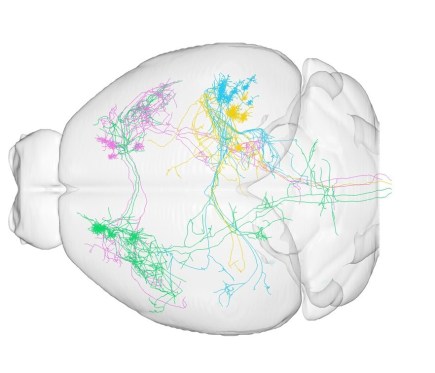
Brain Imaging Factory in China24 (2017)

  • Qingming Luo initiated the HUST-Suzhou Institute for Brainsmatics, a brain imaging “factory.”
  • Each of the numerous machines in Luo’s facility performs automated processing and imaging of tissue samples. The devices make ultrathin slices of brain tissue using diamond blades. The machines also treat the samples with fluorescent stains or other contrast-enhancing chemicals. After sample preparation, the tissue slices are imaged by fluorescence microscopy.
  • The institute has already demonstrated its potential by mapping the structure of an extremely long neuron which “wraps around” the entire mouse brain.
China Brain Mapping Image

Automated Patch-Clamp Robot for In Vivo Neural Recording25 (2017)

  • Boyden and his colleagues developed a robotic system to automate patch-clamp recordings from individual neurons. Its data collection yield is similar to that of skilled human experimenters.
  • By continuously imaging neural tissue using two-photon microscopy, the robot can adapt to a target cell’s movement and shift the pipette to compensate. This adaptation is facilitated by a new type of algorithm called imagepatching. As the pipette approaches its target, the imagepatching algorithm adjusts the pipette’s trajectory based on the real-time two-photon microscopy.
  • This system was tested in vivo using mice. It can be used in vivo so long as the target cells express a fluorescent marker or otherwise fluoresce corresponding to their size and position.

Automated Patch Clamp System

Genome Editing in the Mammalian Brain26 (2017)

  • Precise genome editing in the brain has historically been challenging because most neurons are postmitotic (non-dividing) and this state prevents homology-directed repair (HDR) from occurring. HDR is a mechanism of DNA repair which allows for targeted insertions of DNA fragments with overhangs that are homologous to the region of interest (by contrast, non-homologous end-joining is highly unpredictable).
  • Nishiyama, Mikuni, and Yasuda developed a technique which allows genome editing in postmitotic mammalian neurons. They used adeno-associated viruses (AAVs) and CRISPR-Cas9 to accomplish this.
  • The AAVs delivered ssDNA sequences encoding a single guide RNA (sgRNA) and an insert. Inserts encoding a hemagglutinin tag (HA) and inserts encoding EGFP were both employed. Cas9 was encoded endogenously by transgenic host cells and host animals.
  • This method successfully demonstrated precise genome editing in vitro and in vivo with a low rate of off-target effects. The inserts did not cause deletion of nearby endogenous sequences in 98.1% of infected neurons.

Genome Editing Neurons


References

(1) Markram, H. (2006). The Blue Brain Project. Nature Reviews Neuroscience, 7(2), 153-160. doi:10.1038/nrn1848

(2) Berger, T. W., Song, D., Chan, R. H., Marmarelis, V. Z., Lacoss, J., Wills, J.,… Granacki, J. J. (2012). A Hippocampal Cognitive Prosthesis: Multi-Input, Multi-Output Nonlinear Modeling and VLSI Implementation. IEEE Transactions on Neural Systems and Rehabilitation Engineering, 20(2), 198-211. doi:10.1109/tnsre.2012.2189133

(3) Berning, S., Willig, K. I., Steffens, H., Dibaj, P., & Hell, S. W. (2012). Nanoscopy in a Living Mouse Brain. Science, 335(6068), 551-551. doi:10.1126/science.1215369

(4) Marx, V. (2013). Neuroscience waves to the crowd. Nature Methods, 10(11), 1069-1074. doi:10.1038/nmeth.2695

(5) The White House Office of the Press Secretary. (2013, April 2). Fact Sheet: BRAIN Initiative [Press release]. Retrieved from https://obamawhitehouse.archives.gov/the-press-office/2013/04/02/fact-sheet-brain-initiative

(6) Chung, K., Wallace, J., Kim, S., Kalyanasundaram, S., Andalman, A. S., Davidson, T. J.,… Deisseroth, K. (2013). Structural and molecular interrogation of intact biological systems. Nature, 497(7449), 332-337. doi:10.1038/nature12107

(7) Deadwyler, S. A., Berger, T. W., Sweatt, A. J., Song, D., Chan, R. H., Opris, I.,… Hampson, R. E. (2013). Donor/recipient enhancement of memory in rat hippocampus. Frontiers in Systems Neuroscience, 7(120). doi:10.3389/fnsys.2013.00120

(8) Oizumi, M., Albantakis, L., & Tononi, G. (2014). From the Phenomenology to the Mechanisms of Consciousness: Integrated Information Theory 3.0. PLoS Computational Biology, 10(5). doi:10.1371/journal.pcbi.1003588

(9) Okano, H., Miyawaki, A., & Kasai, K. (2015). Brain/MINDS: brain-mapping project in Japan. Philosophical Transactions of the Royal Society B: Biological Sciences, 370(1668). doi:10.1098/rstb.2014.0310

(10) Szigeti, B., Gleeson, P., Vella, M., Khayrulin, S., Palyanov, A., Hokanson, J.,… Larson, S. (2014). OpenWorm: an open-science approach to modeling Caenorhabditis elegans. Frontiers in Computational Neuroscience, 8. doi:10.3389/fncom.2014.00137

(11) Akopyan, F., Sawada, J., Cassidy, A., Alvarez-Icaza, R., Arthur, J., Merolla, P.,… Modha, D. S. (2015). TrueNorth: Design and Tool Flow of a 65 mW 1 Million Neuron Programmable Neurosynaptic Chip. IEEE Transactions on Computer-Aided Design of Integrated Circuits and Systems, 34(10), 1537-1557. doi:10.1109/tcad.2015.2474396

(12) Markram, H., Muller, E., Ramaswamy, S., Reimann, M., Abdellah, M., Sanchez, C.,… Schürmann, F. (2015). Reconstruction and Simulation of Neocortical Microcircuitry. Cell, 163(2), 456-492. doi:10.1016/j.cell.2015.09.029

(13) Liu, J., Fu, T., Sheng, Z.,… Lieber, C. M. (2015) Syringe-Injectable electronics. Nature Nanotechnology. 10(7), 629–636, doi:10.1038/nnano.2015.115.

(14) Seo, D., R. M., Neely, K., Shen,… Maharbiz, M. M. (2016). Wireless Recording in the Peripheral Nervous System with Ultrasonic Neural Dust. Neuron. 91(3), 529–539, doi:10.1016/j.neuron.2016.06.034.

(15) Deadwyler, S. A., Hampson, R. E., Song, D., Opris, I., Gerhardt, G. A., Marmarelis, V. Z., & Berger, T. W. (2016). A cognitive prosthesis for memory facilitation by closed-loop functional ensemble stimulation of hippocampal neurons in primate brain. Experimental Neurology. doi:10.1016/j.expneurol.2016.05.031

(16) Poo, M., Du, J., Ip, N., Xiong, Z., Xu, B., & Tan, T. (2016). China Brain Project: Basic Neuroscience, Brain Diseases, and Brain-Inspired Computing. Neuron, 92(3), 591-596. doi:10.1016/j.neuron.2016.10.050

(17) Flesher, S. N., Collinger, J. L., Foldes, S. T., Weiss, J. M., Downey, J. E., Tyler-Kabara, E. C.,… Gaunt, R. A. (2016). Intracortical microstimulation of human somatosensory cortex. Science Translational Medicine, 8(361). doi:10.1126/scitranslmed.aaf8083

(18) Lomas, N. (2017) “Superintelligent AI explains Softbank’s push to raise a $100BN Vision Fund.” TechCrunch, 27 Feb. 2017, https://techcrunch.com/2017/02/27/superintelligent-ai-explains-softbanks-push-to-raise-a-100bn-vision-fund/. Accessed 1 Jan. 2018.

(19) Regalado, A. (2017). “Silicon Valley’s race to develop a brain-computer interface.” MIT Technology Review, 16 Mar. 2017. https://www.technologyreview.com/s/603771/the-entrepreneur-with-the-100-million-plan-to-link-brains-to-computers/. Accessed 28 Aug. 2017.

(20) Etherington, Darrell. “Elon Musk’s Neuralink wants to boost the brain to keep up with AI.” TechCrunch, 27 Mar. 2017, techcrunch.com/2017/03/27/elon-musks-neuralink-wants-to-boost-the-brain-to-keep-up-with-ai/. Accessed 29 Aug. 2017.

(21) Constine, J. “Facebook is building brain-computer interfaces for typing and skin-hearing.” TechCrunch, 19 Apr. 2017, https://techcrunch.com/2017/04/19/facebook-brain-interface/. Accessed 28 Aug. 2017.

(22) Hatmaker, Taylor. “DARPA awards $65 million to develop the perfect, tiny two-way brain-computer interface.” TechCrunch, 10 July 2017, techcrunch.com/2017/07/10/darpa-nesd-grants-paradromics/. Accessed 29 Aug. 2017.

(23) Song, D., She, X., Hampson, R. E., Deadwyler, S. A., & Berger, T. W. (2017). Multi-resolution multi-trial sparse classification model for decoding visual memories from hippocampal spikes in human. 39th Annual International Conference of the IEEE Engineering in Medicine and Biology Society (EMBC). doi:10.1109/embc.2017.8037006

(24) Cyranoski, D. (2017). China launches brain-imaging factory. Nature, 548(7667), 268-269. doi:10.1038/548268a

(25) Suk, H., Welie, I. V., Kodandaramaiah, S. B., Allen, B., Forest, C. R., & Boyden, E. S. (2017). Closed-Loop Real-Time Imaging Enables Fully Automated Cell-Targeted Patch-Clamp Neural Recording In Vivo. Neuron, 95(5). doi:10.1016/j.neuron.2017.08.011

(26) Nishiyama, J., Mikuni, T., & Yasuda, R. (2017). Virus-Mediated Genome Editing via Homology-Directed Repair in Mitotic and Postmitotic Cells in Mammalian Brain. Neuron, 96(4). doi:10.1016/j.neuron.2017.10.004