Spin by Robert Charles Wilson: 99/100. Science fiction is often said to be defined by a “sense of wonder”. I personally believe that the best science fiction features both a sense of wonder and a way of intertwining that sense of wonder with the deeply personal sense of what it means to be human. Spin does all this and more. It has relatable, complex, and believable characters who drive the story’s meaning. It gives us not one but several intensely awe-inspiring sci-fi concepts. It provides gorgeously philosophical and often poetic prose, a pleasure to absorb. In this book, the personal relationships of characters who grow up and change over the course of decades are pitted against a world experiencing a transformative crisis which forces the reader to consider powerful philosophical questions about what it means to live a good life as an individual as well as about humanity’s place in the universe. Though Spin spans a number of settings, cultural contexts, and technical areas (e.g. medicine, politics, aerospace, and more), the story is clearly very well-researched as it maintains an exceptional degree of verisimilitude. I won’t say much about the ending except that it is spectacular and even spiritually gratifying, though very much grounded in science. Spin is everything science fiction is meant to be. It gives us the incomparable gift of seeing life both at the level of human relationships and at the scale of the cosmos.


Solaris by Stanislaw Lem: 99/100. A remarkable feature of the human species is the desire to know, understand, and derive meaning. This can involve seeking to know oneself via introspection or seeking to know the universe via scientific inquiry. In Solaris, a mysterious alien entity which takes the form of a living ocean covering an entire planet acts as a centerpiece to examining questions of human knowledge, understanding, and purpose. As the crew of a research station orbiting Solaris begins to experience certain phenomena caused by the alien ocean, they are forced to confront their own pasts, traumas, and regrets. As a deeply emotional and psychological tale, Solaris examines the limits of human understanding both of the universe and of the self. While some ideas within the story may seem unsettling, I did not think it came across as an especially dark narrative, merely one which dispassionately portrays the human struggle for meaning against a backdrop of a strange and wonderous cosmos that often resists attempts to frame it within comprehensible human terms.
Station Eleven by Emily St. John Mandel: 99/100. Much of the essence of art is to reflect what makes us human, helping us better explain to ourselves what makes us tick. Station Eleven is a science fiction novel about a deadly flu pandemic which brings about the end of the world. Notably, it was written several years prior to the emergence of COVID-19. Emily St. John Mandel wields the premise masterfully to touch our souls and help us come to terms with human kindness, cruelty, hope, and vulnerability. Through its deep tragedy and heartfelt characters, the book manages to link questions of the individual and the global. We take a hard look at how the meaning of civilization connects to the meaning of life. Emily St. John Mandel’s prose puts billions to death. Those who survive must find purpose against the backdrop of the visceral viciousness of the apocalypse. Some immerse themselves in art, traveling the postapocalyptic wilderness and performing Shakespeare plays for pockets of survivors. Some join a religious cult led by a violent prophet who resembles history’s most monstrous men. Yet even this figure is skillfully humanized (though not exonerated) as having emerged from a frightened and damaged boy. Richly constructed character histories weave together in the end, creating a gorgeous tapestry which reveals both the inherent goodness and the intrinsic darkness of the human species. Station Eleven is lyrical, haunting, and intense. It immerses the reader in a realm which translates philosophy into the more brutally real language of emotion.

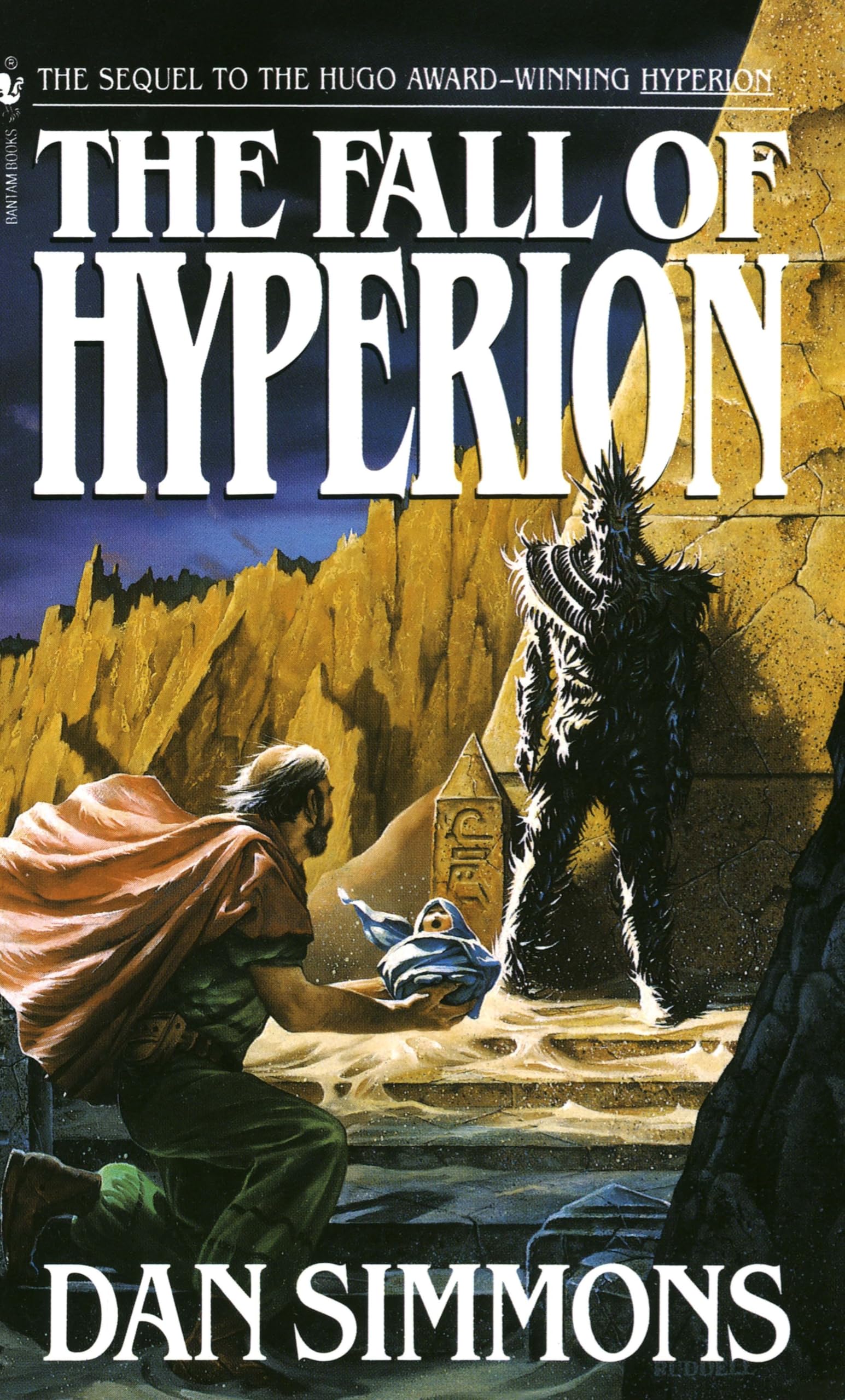
The Fall of Hyperion by Dan Simmons: 99/100. With its lyrical prose, immense cultural complexity, and epic scope, The Fall of Hyperion (hereafter referred to as “The Fall”) explosively propels into action the spring-loaded setup of the first Hyperion novel, kicking off a vividly imagined interstellar conflict of breathtaking scale and detail. I cannot overstate the awe-inspiring majesty and orchestral diversity of the Hegemony civilization as well as the incredible facility of Simmons with his extensive web of literary, religious, and historical allusions. Every line reads like poetry. The Fall possesses emotional depth to rival Dune and worldbuilding to compete with The Lord of the Rings. The Fall explores themes at the intersection of religious faith and penance, love and sacrifice, ecological destruction and the place of humanity in the universe, and (perhaps most centrally) artificial intelligence and God. Its history stretches both into the past and into the deep future with the Time Tombs sliding inexorably backwards in time as well as the ever-present specter of the terrifying Shrike and its Tree of Thorns having emerged from some distant tomorrow. After reading The Fall, I have taken on the conviction that a literary scholar could devote his or her entire career to studying the Hyperion tetralogy. The Fall is a mythopoetic elegy to humanity’s search for meaning in the cosmos, to the richness of our civilization’s vast story, and to our ultimate potential as a species.
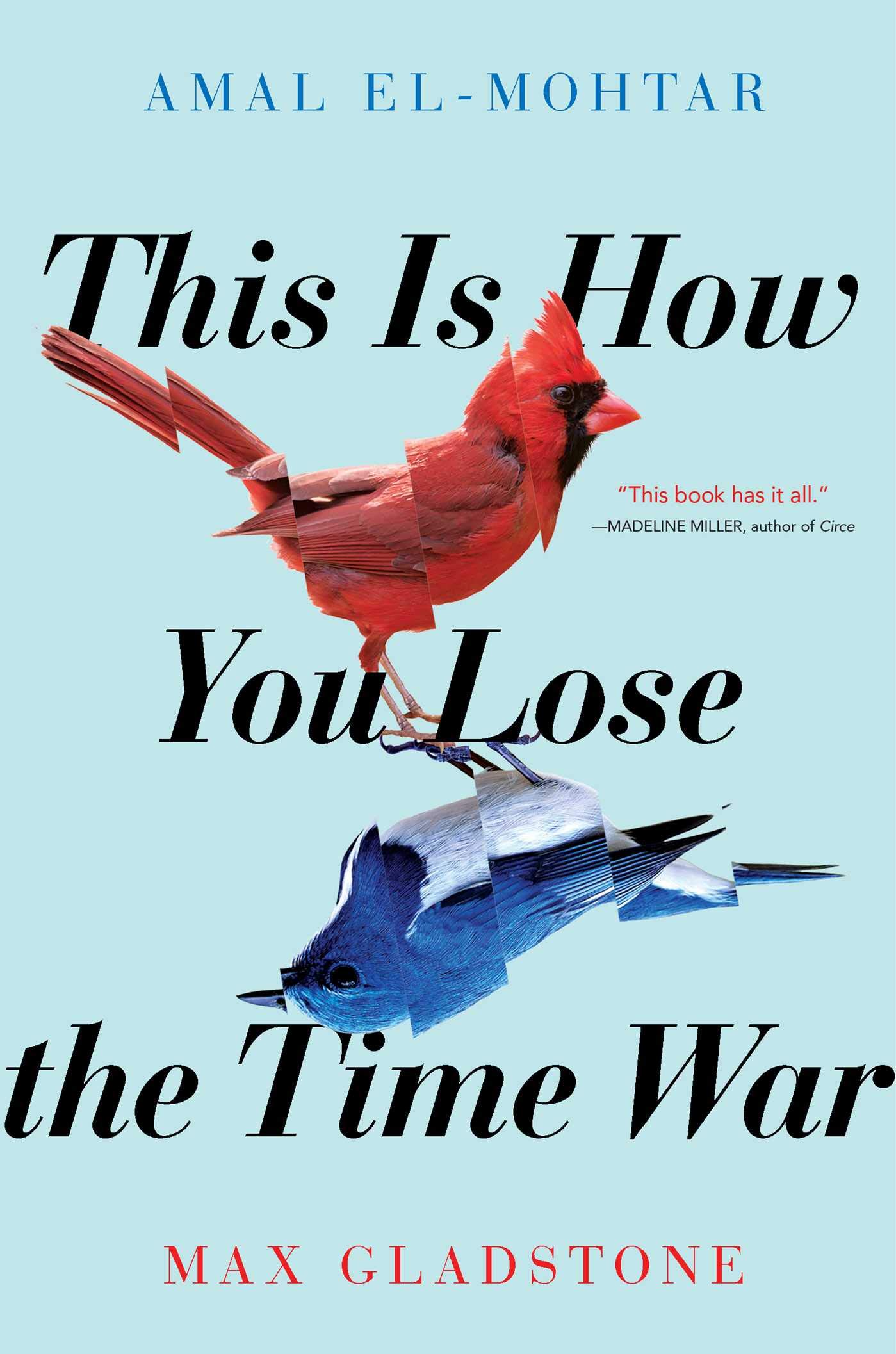
This Is How You Lose the Time War by Amal El-Mohtar and Max Gladstone: 98/100. I have a special fondness for fiction which reads like poetry. This Is How You Lose the Time War by Amal El-Mohtar and Max Gladstone represents a tour de force of far-future poetic science fiction which sparkles with imagination, intensity, and wonder. An epistolary novel, it is told through letters exchanged by a pair of time-traveling cyborg supersoldiers named Red and Blue respectively who start as mortal enemies on opposite sides of a war and gradually fall in love. Each letter is delivered through a distinct medium; powdered cod bone sprinkled over a biscuit, a code of mineral veins in lava, a pattern of a bee’s flight and the venom of its sting, and many more. Red and Blue often spend decades in different pasts and futures, taking on the forms of various people and animals as part of their war. Though this conflict’s degree of convolutedness is far beyond human comprehension, the authors expertly utilize lyrical language to transmit a tantalizing taste of its scope. The central characters are so far beyond human that they should seem alien to the reader, yet their emotions come across as piercing and visceral. Beyond this, the beauty of the language gives the narrative a songlike quality which instills every passage with sensation, crispness, and vivacity. In terms of symbolism and metaphor, the book contains more than enough fractal complexity to fill the Library of Congress with multilayered literary analyses. This Is How You Lose The Time War furthermore incorporates a wealth of fascinating philosophical ideas involving love, war, peace, power, and freedom which are built on top of its spectacular wordsmithing. This book makes me feel like I am sipping liquid beauty during the cool of early morning while watching the stars of an alien sky slip beneath the horizon.

Blindsight by Peter Watts: 98/100. It is difficult to describe Blindsight. I could clumsily slap labels onto the novel and call it literary psychological sci-fi horror with an emphasis on the philosophy of neuroscience. I could vaguely refer to it as a boiling froth of darkness replete with nightmarish poetics. I could say that it manages incorporate both aliens and vampires in a terrifyingly believable fashion. I could pontificate on how the story oozes with malign hyperintelligence and conveys a sense of hurtling movement too fast to track with human eyes. Yet none of this can truly capture the frightening majesty of the narrative. More directly, Blindsight is a story about contact with aliens. After humanity first encounters the aliens, the governments of Earth send a group of cyborgs, freaks, and savants on a living spaceship to meet the aliens. The captain of this group is vampire, a technologically resurrected predator with intelligence vastly exceeding that of any human. The protagonist (Siri Keeton) had half his brain surgically removed when he was a child, rendering him incapable of empathy and forcing him to learn how to navigate social interactions through purely algorithmic techniques. Siri’s unusual backstory and motivations are richly explored over the course of the story. The novel explores ideas surrounding radical neurodivergence, transhumanism, the effects of neurotechnology on society, intelligence, consciousness, artificial intelligence, empathy, the blurring of the human-machine divide, emotional abuse, ableism, and evolutionary biology. As the book progresses, numerous psychological and philosophical revelations accrue. The aliens are more truly alien than any other aliens I have encountered in fiction. It is through a certain aspect of these aliens that the book’s most intensely frightening philosophical proposition is unveiled, but I will not spoil that for the reader. Prepare to be deeply disturbed in the most intellectually stimulating of ways.
The Chronoliths by Robert Charles Wilson: 97/100. Science fiction is the literature of ideas. Quality science fiction links these ideas to our own lives in a meaningful fashion. The Chronoliths by Robert Charles Wilson is a novel which successfully weaves together big ideas with intensely personal trajectories of individual human lives. Through this style of writing, it allows us to see ourselves in the characters and reflect upon our roles in the epic drama of civilization and the universe. The Chronoliths blends several stories into a unified narrative. It tells the story of icy monuments which periodically materialize at various locations across the Earth, causing death and destruction where they appear. These Chronoliths have writing on them, text which proclaims future military victories by a warlord named Kuin. It tells the story of an ordinary man named Scott Warden, his efforts to protect his daughter, and how his destiny is inextricably linked to the Chronoliths by the physical forces of nature. It tells the story of a genius physicist named Sulamith Chopra who finds herself increasingly obsessed with the Chronoliths and how they influence the flow of history. It tells the story of a single mother named Ashlee and her difficult relationship with her sociopathic son Adam Mills. I am struck by the deeply human identities of all of the characters (even many of the minor characters). They feel so vividly real with their struggles, quirks, backstories, and traumas. I tangibly feel their hopes and fears as they search for purpose in the midst of troubled world. All of this is accentuated by the lovingly detailed global setting which glows with verisimilitude. I should mention that I am a longtime fan of Robert Charles Wilson’s writings. His short piece Utriusque Cosmi is perhaps my favorite story of all time. Yet even with my high expectations going into The Chonoliths, I was nonetheless floored by its haunting beauty.


Hyperion by Dan Simmons: 97/100. Hyperion is no ordinary space opera. Its resplendent worldbuilding rarely follows traditional science fiction tropes, yet each and every careful detail of the galactic civilization called the Hegemony somehow feels right. The novel features exceptionally lush prose with blazingly colorful imagery and startling emotional revelations. It consists of six stories (modeled after the Canterbury Tales) told by characters on a pilgrimage across the planet Hyperion, interspersed by episodes describing their journey as they approach the domain of the Shrike, a spiky metallic entity that defies the laws of time and space. Each story reveals new insights about the Hegemony and the terrifying mystery of the Shrike. The stories include: (1) the priest’s tale and its examination of Christian faith in the context of the Shrike’s alien influence, (2) the soldier’s tale and its blend of sex and love and militarism and violence with the Shrike at its center, (3) the poet’s tale where an eccentric writer finds himself with the Shrike as his muse as he seeks truth through his poetry, (4) the scholar’s tale where a Jewish professor’s daughter contracts a strange illness that causes her to age in reverse after encountering the Shrike on a research expedition, (5) the detective’s tale where a tough-as-nails woman and a cybernetic recreation of the poet John Keats fall in love as they spar with the vast power of AI organization called the Technocore and grapple with its Ultimate Intelligence project, and (6) the consul’s tale featuring a touching tragic love story which takes place as an oceanic planet called Maui-Covenant is colonized by the Hegemony and the local population is forced to give up their cherished island culture. Hyperion concludes with a cliffhanger as the pilgrims arrive at the infamous Time Tombs and prepare to meet the Shrike. (The next book in the series is titled “The Fall of Hyperion”). In my view, this remarkably coherent blend of disparate narratives together forms a resplendent literary achievement. It will have a lasting influence on my own approach to science fiction writing and to thinking about the beauty of the world around me.
The Sparrow by Mary Doria Russell: 95/100. It is not easy to incorporate theology into science fiction without proselytizing the reader, yet The Sparrow does an elegant job of examining philosophy of religion through a first contact lens. At a deeper level, this book is about the human search for meaning and belonging in the universe, so even nonreligious readers can viscerally appreciate most of its ideas. Some other important themes the interplay between love, trauma, guilt, faith, anger, and healing. There are also some interesting (and reasonably balanced) forays into the psychology surrounding sexual abstinence of priests. The Sparrow charts the painful recovery of the sole survivor of a mission to make first contact with aliens through visiting them directly on their home planet. The survivor is Father Emilio Sandoz and he is physically disfigured and psychologically scarred by his experiences. The novel works backwards to explain what happened to him and the rest of the crew of the mission. This book includes some extremely disturbing occurrences. I believe that these occurrences were necessary for the story, but they might be triggering to some readers, so please be aware of this. On a lighter note, Mary Doria Russell’s writing clearly demonstrates her exceptional skills as a historian. Part of what makes this story feel so real is that it contains a wealth of impeccably researched cultural depth. Latin American settings, the history of Turkey, the bureaucracy of the Roman Catholic Church, and more are covered in loving detail. Furthermore, the characters show thoroughly believable backstories, quirky personalities, and complex psychological evolution. I care about these people. The Sparrow represents one of the most philosophically rich and thought-provoking books that I have yet encountered.
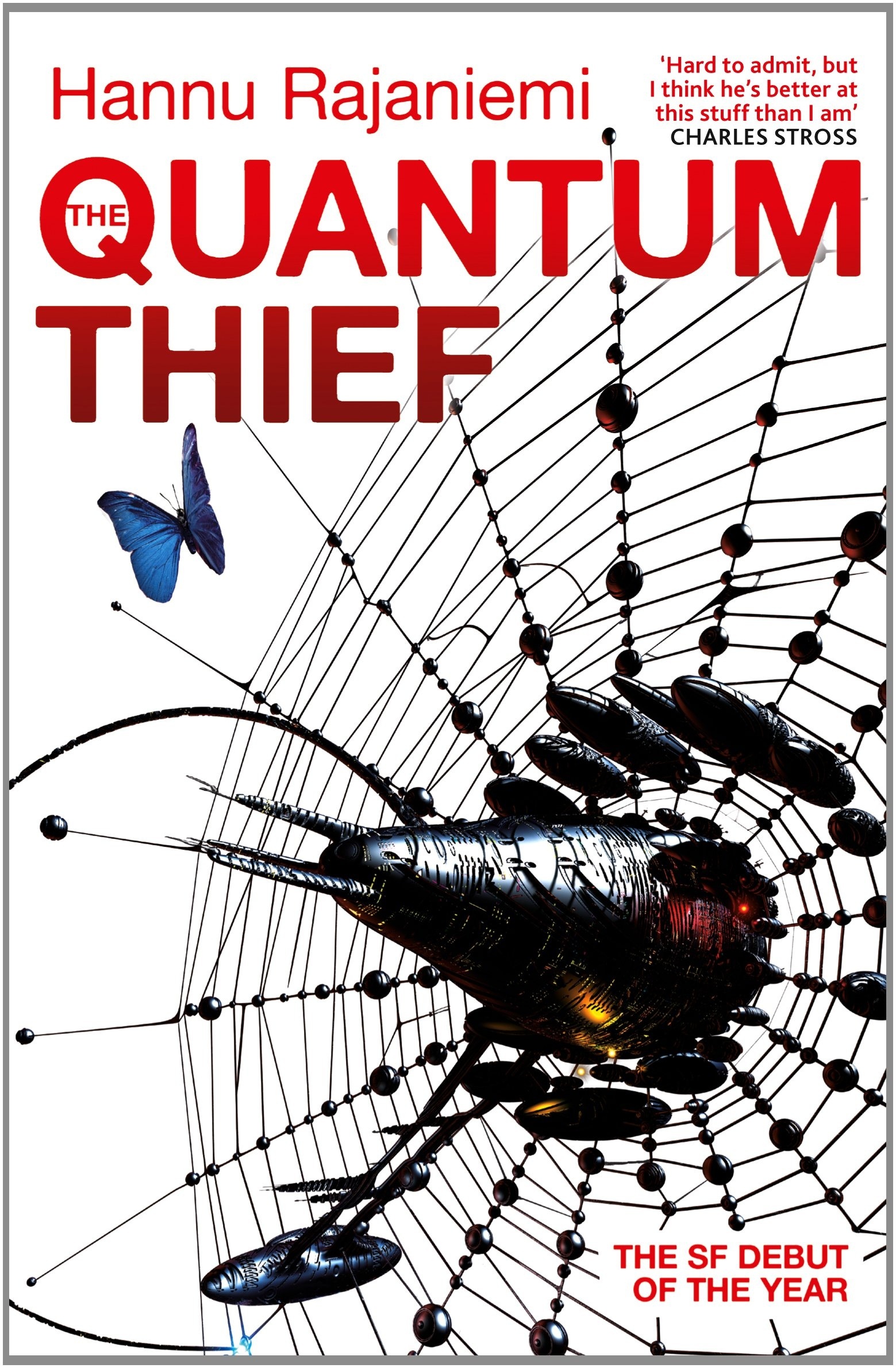
The Quantum Thief by Hannu Rajaniemi: 95/100. I would characterize The Quantum Thief as the most imaginative novel I have ever read. From beginning to end, it sparkles with kaleidoscopic strangeness. Though some readers might be put off by the onslaught of unfamiliar terminology, I found the bizarre language exhilarating. It tells the tale of a gentleman thief named Jean le Flambeur who goes through a series of convoluted adventures in a hyper-futuristic postsingularity version of our own solar system. The novel explores the unreliability of memory and mind in a future where advanced neurotechnology is ubiquitous and any dividing line between biology and technology has been completely obliterated. I possess great admiration for the sheer audacity of the Rajaniemi’s creativity. The walking city on Mars (called the Oubliette) where much of the story takes place is only the tip of the iceberg. When people die in that city, their minds are transferred into colossal robotic monsters known as the Quiet which toil beneath the city on the surface of Mars. A detective accesses the Oubliette’s exomemory to solve the mystery of a murdered Chocolatier. The living spaceship named Perhonen flirts with the thief protagonist. Every line of the book adds more of these kinds of concepts. As the plot cascades, complex mysteries of missing memories and buried pasts unravel. All this mixes with the thrill of the heist, a cast of believable and emotionally resonant characters, a complex alien political landscape, and a sense that this futuristic society has been oddly suffused with French culture. It is difficult to properly describe the profoundly colorful weirdness of The Quantum Thief. You just have to read it for yourself.
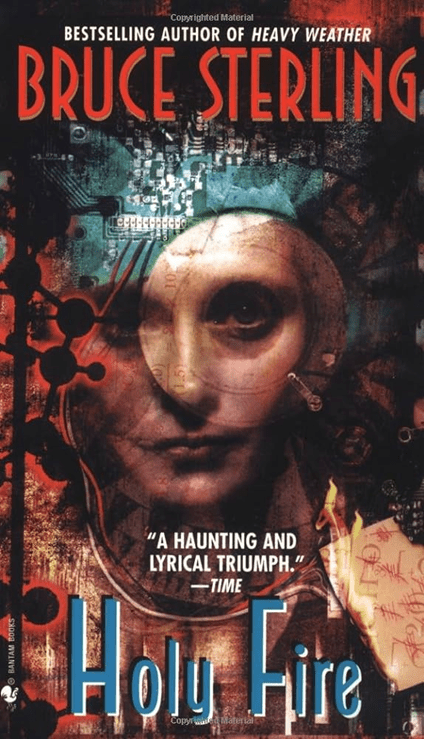
Holy Fire by Bruce Sterling: 95/100. While some may find Bruce Sterling’s Holy Fire meandering or indulgent, I found immense charm in its celebration of flamboyantly artsy cultural concepts. The novel explores the experiences of 94-year-old woman who undergoes a rejuvenation treatment to restore her biological age to around 20, then flees from the clinical authorities and from the USA to engage in a rebellious journey through a futuristic bohemian Europe. Replete with complex sociopolitical and scholarly aesthetic philosophy, the book is set against the backdrop of a world where gerontocratic governments have taken hold due to life extension treatments. Though many stories only show the negatives of longevity, Holy Fire examines the concept in a reasonably balanced manner and does not come across as polemical. It furthermore displays a strange yet mostly believable future with incredible attention to detail. I particularly appreciated the narrative’s deep exploration of creative subcultures such as those of fashion, photography, sculpting, and modeling as well as how such subcultures might manifest in a future with very long-lived people. Through its bohemian background, the book examines themes around the psychology of youth and old age, longevity technology, posthumanism, sexuality, political structures, and the meaning of artistic expression. Although the characters do not possess exceptional verisimilitude, their radically unique quirkiness manifests them in vivid color. Holy Fire draws strength more as a proverbial picture gallery of ideas than as a traditional written narrative.
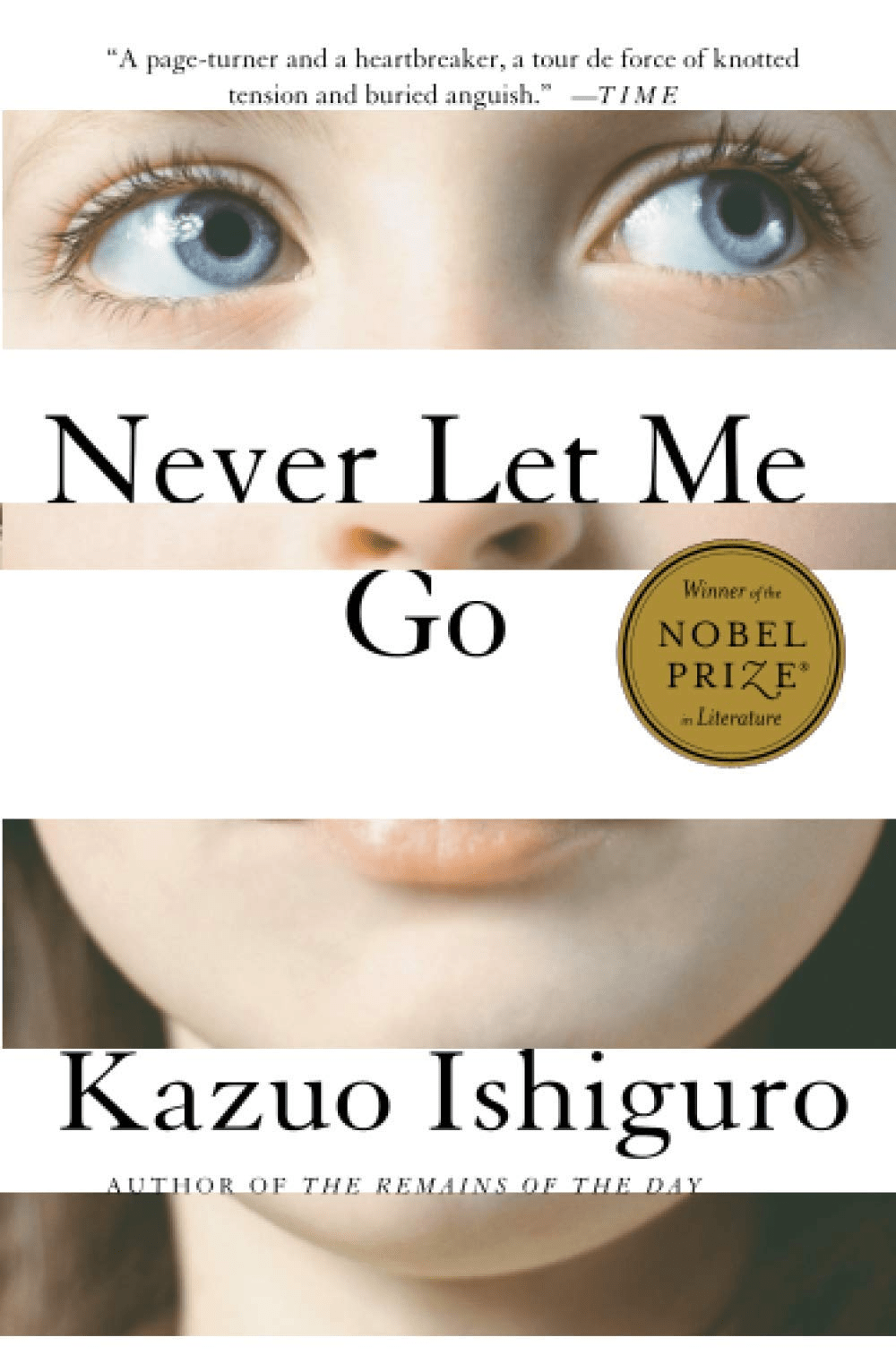
Never Let Me Go by Kazuo Ishiguro: 95/100. For many, growing up is filled with both yearning and conflict. Never Let Me Go successfully captures the emotional intensity associated with the coming-of-age process while simultaneously investigating some dark concepts in bioethics. It is the story of Kathy, Tommy, Ruth, and a few others who grow up at an unusual English boarding school called Hailsham. The book chronicles the unfolding of their lives in a vividly believable and exquisitely detailed fashion as they hurtle towards an inevitable fate. They experience the familiar trials of growing up: navigating tricky social landscapes, falling in love, learning about the world, and forming their own identities. But there is a tragic context which overshadows these experiences. To reveal the specifics of this context would spoil some key aspects of the book, so I will only state that it explores some fascinating ideas in the area of medical science fiction. Despite the bioethics-related speculation which appears later in the novel, the narrative remains centered on the individual experiences of the characters, which fits well with its stylistic approach. Themes of mortality, love, friendship, and meaning are explored throughout. Perhaps most importantly, Never Let Me Go represents a deeply emotional story. By the end, I was weeping for the intricate characters who had decided to quietly accept something very sad indeed.
Exhalation by Ted Chiang: 95/100. As someone who was strongly influenced by Ted Chiang’s first short story collection “Stories of Your Life and Others”, I came into Exhalation with high expectations. I was not disappointed. Chiang possesses a special talent for crafting brilliant short pieces that combine intense clarity, tremendous conceptual ingenuity, and vast emotional depth. For instance, The Merchant and the Alchemist’s Gate followed the lyrical style of the classic One Thousand and One Nights, provided an uplifting narrative of loss and regret and redemption, and accessed themes of acceptance and fate. Another excellent story in the collection, The Truth of Fact The Truth of Feeling, gave a balanced perspective on how technology influences the way our brains think and communicate while also examining both a complex relationship between a father and daughter and a linguistics-driven historical scenario. The Lifecycle of Software Objects examines the concept of raising artificially intelligent creatures as children in a highly believable fashion. Exhalation (the title story) takes place in an alternate universe populated by a very different sort of life, yet it precisely interrogates ideas of vital importance to both the grand human condition and the deeply personal. Ted Chiang has once again demonstrated himself as one of the greatest short form science fiction authors ever to live.

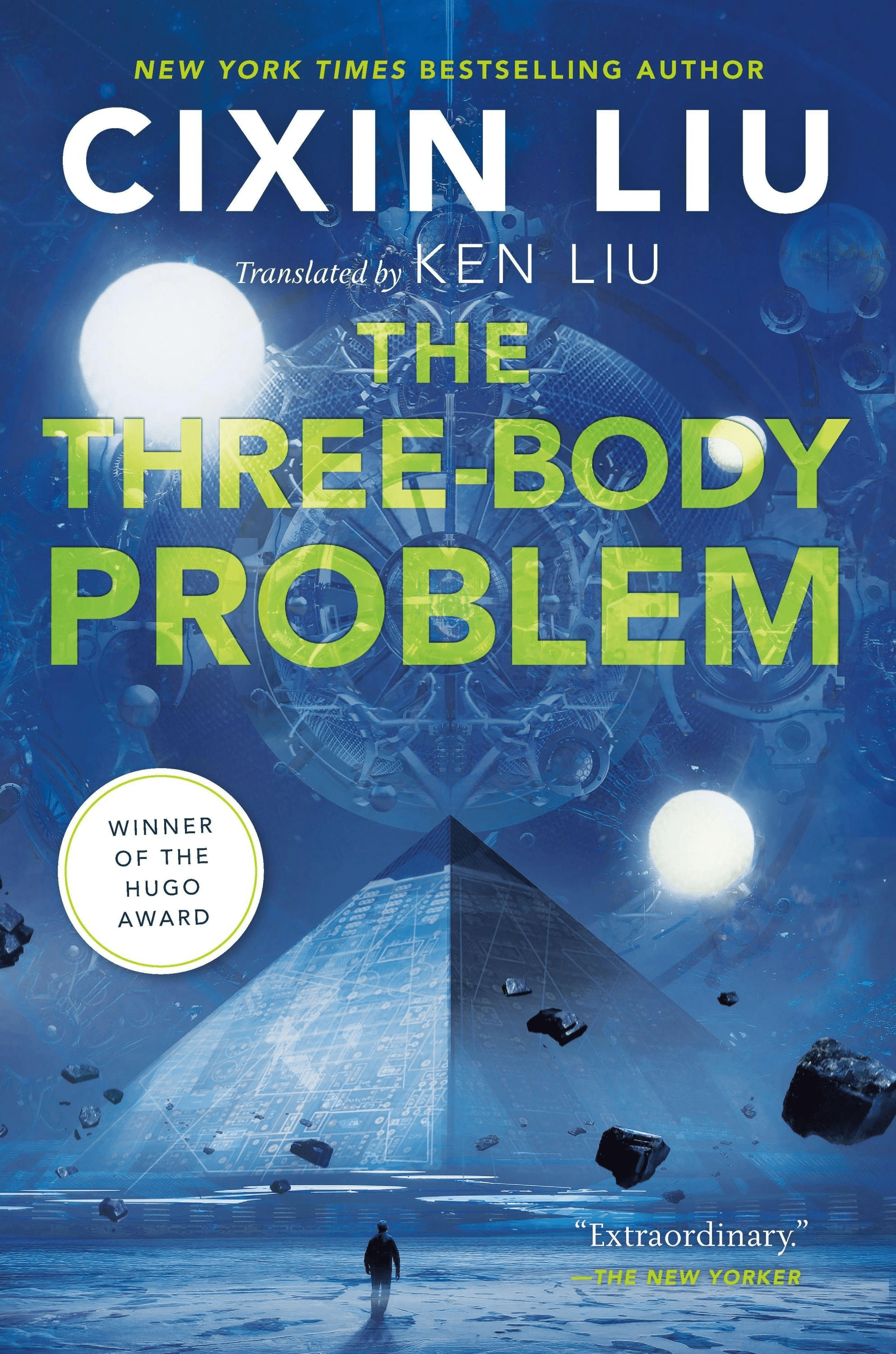
The Three-Body Problem by Cixin Liu: 94/100. Reading this novel is a headfirst dive into a vividly imagined world where deep questions of human nature are confronted in the context of an impending alien invasion. Despite containing many highly fantastical elements, the Three-Body Problem possesses a clarity of thought that makes it highly believable. This is facilitated by how the Liu expertly interweaves the history of the Chinese Cultural Revolution into the early parts of the story. Another strength of Liu’s novel is how he demonstrates complex physical phenomena in a highly understandable and compelling fashion, leading to the intense sense of wonder that is at the core of the spirit of science fiction. At the larger scale, The Three-Body Problem explores how patterns of history repeat due to human psychology, helps us to consider the place of humans in the universe, and asks the open-ended question of whether humanity is a force of good or a force of evil. In my view, this intellectually exhilarating novel represents a titanic literary achievement and is quite deserving of the high level of recognition it has received.
Childhood’s End by Arthur C. Clarke: 92/100. It is not easy to capture the sheer sense of awe which comes from contemplating that which is beyond human comprehension. Childhood’s End delivers a shockingly provocative glimpse into the sublime while forcing the reader to contemplate the place of humanity in the universe. As humans, many of us enjoy telling ourselves stories about loving gods. Those inclined towards Lovecraftian tales take the opposite approach, conjuring up nightmares of cosmic monsters. Arthur C. Clarke unflinchingly finds a middle ground between these extremes. At the staggering conclusion of Childhood’s End, we experience both the cold realization of our own insignificance and a spiritually satisfying transcendence. Clarke proposes that to truly understand the divine, we may need to transform into something which is no longer even remotely human. Perhaps I am of the minority opinion that I am not repulsed by this notion, though I certainly do have some reservations about it. This is a spectacularly thought-provoking novel. My only complaint is that the first two sections of the book are significantly less compelling than its Earth-shattering conclusion, though they are necessary to set it up. Because the story was published in 1953, it includes some very outdated sexist assumptions and racist terminology. (As a person who has read some of Clarke’s later novels, I can attest that he improved over time in this regard). The characters and plot in the initial two-thirds of the book feel too stiff and detached for my taste. Nonetheless, this is more than made up for with the final portion of the story. If you want to think about the big questions and experience both extreme alienness and spiritual wonderment at the same time, you should read this book.
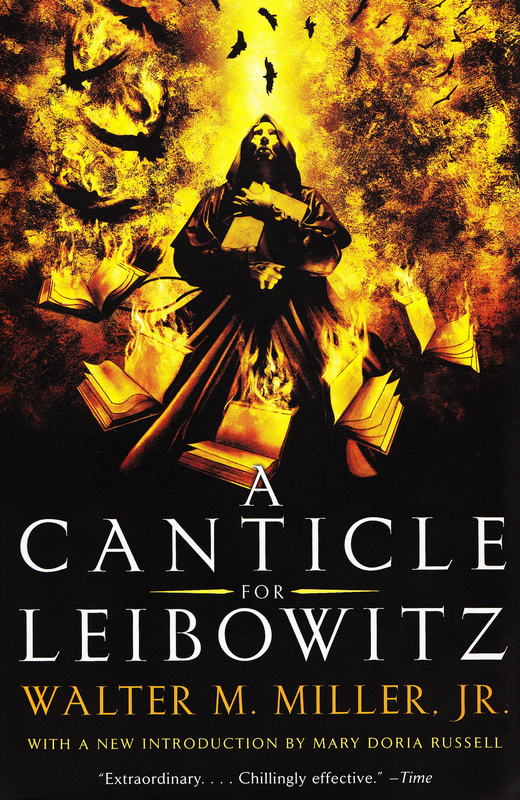
A Canticle for Leibowitz by Walter M. Miller Jr.: 75/100. Although A Canticle for Leibowitz is highly regarded by critics and does indeed present an extremely compelling broader idea, I found myself somewhat disappointed by how the story executed its central objectives. This is partially because I went in with exceptionally high expectations. I had hoped the story would represent a richly sweeping future history of humanity’s fall, hard-fought struggle to rise again, and tragic second fall which the novel is known for. Instead, I found a set of three fragmented narratives which only loosely connected to the overall thrust of the plot. The third section of the book did not (in my view) present a convincing case of why humanity was doomed to destroy itself a second time. Much of this section dwelt on tangentially-related religious philosophy which did not in my opinion possess sufficient universality to satisfy non-Christian readers. The second section of the book had some merits in the way it displayed the reemergence of basic and applied sciences yet suffered from a rather confusing and again tangential set of plotlines. I felt that the first section of the book was the most impressive, with well-developed characters, strong imagery, and an overall compelling setup of the challenges facing humanity after a nuclear apocalypse. I also felt the intersection of religious and secular concepts was much better handled and more balanced in this first part of the story. It believably showed how religion may shape a shattered world, it offered an intellectually stimulating account of how religious and secular impulses can work together, and it allowed readers to come to their own conclusions. Additionally, the characterization was much stronger in the story’s first section. Despite the narrative overall not meeting my perhaps unfairly high expectations, I feel that it did contribute meaningfully to my literary and philosophical learnings and I am glad I read it.
The Windup Girl by Paolo Bacigalupi: 70/100. As one of the darkest reflections on human nature I have encountered, The Windup Girl represents a truly dystopian novel. Set in a biopunk Bangkok, it centers around a future where climate change has led to severe resource limitations and most people struggle to survive. As a consequence, the worst is brought out in people. Most of the characters are selfish, greedy, cruel, or indifferent to the suffering of others. Oppression, starvation, and extreme violence are the norm. Western “calorie companies” control the world’s food supply. The character for which the book is titled is a windup girl, a genetically engineered slave who endures horrific sexual abuse after having been abandoned in Bangkok by her former Japanese master. Over the course of the story, themes of culture, colonialism, racism, resistance, Eastern religion, poverty, sexuality, power, and biotechnology are explored in depth. While I personally think the author’s vision is one of unrealistic pessimism, the story does present an interesting worst-case scenario that may be valuable to consider. Although none of the characters are ethical or likeable, many of them are complex and believable, inducing the reader to have sympathy for their plights. I would have rated this book much lower if not for its beautifully immersive prose, strong pacing, detailed cultural milieu, and excellently written (though mostly morally despicable) characters. As an extreme philosophical exercise, this novel delivers well. Nonetheless, it is highly violent and disturbing and thus potentially quite unpleasant to sensitive readers.

 LoganThrasherCollins.com
Awesome reviews! Awesome list!
LikeLike